ADA signage mistakes in NYC are one of the most common—and costly—issues faced by commercial property owners, offices, retail stores, and healthcare facilities. New York City enforces ADA (Americans with Disabilities Act) signage requirements strictly, and even small errors can result in violations, fines, or legal action.
In this guide, we break down the most frequent ADA signage mistakes NYC businesses make, explain why they matter, and show you how to stay compliant with confidence.
Why ADA Signage Compliance Matters in NYC?
ADA signage isn’t just a recommendation—it’s a legal requirement for most public and commercial spaces in NYC. Proper signage ensures accessibility for individuals with visual impairments while protecting businesses from penalties.
Common consequences of ADA non-compliance include:
- Costly citations or fines
- Lawsuits and settlement fees
- Failed building inspections
- Negative brand reputation
Installing compliant signs from the start is far more cost-effective than fixing violations later.
👉 Learn more about compliant solutions on our ADA signs NYC page.
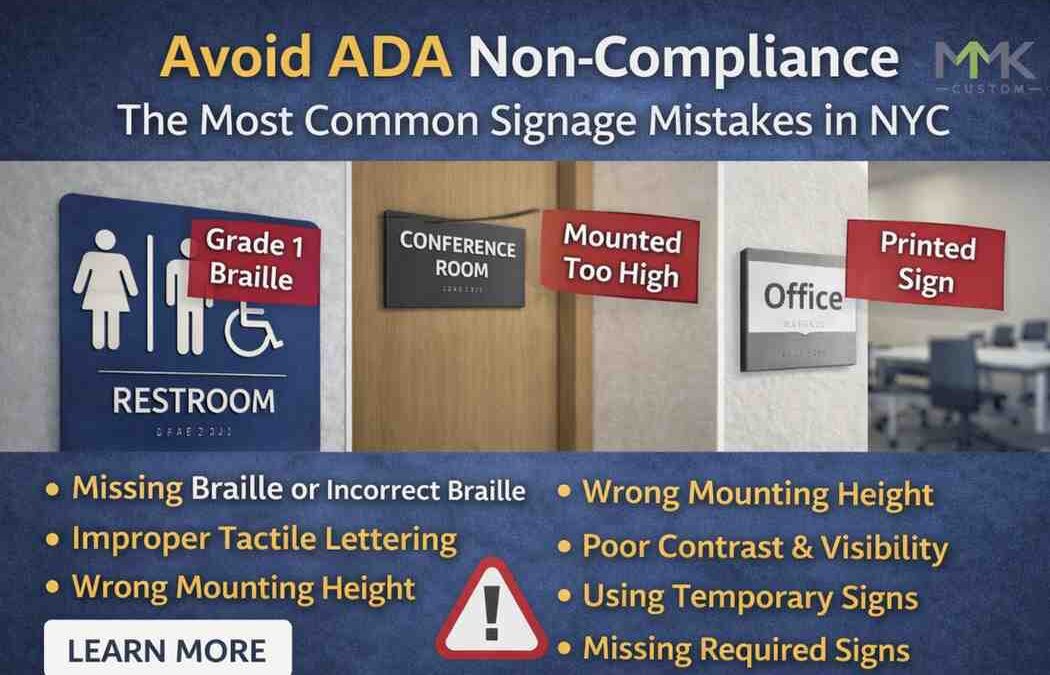
1. Missing or Incorrect Braille
One of the most common ADA signage mistakes NYC businesses make is using:
- No Braille at all
- Incorrect Braille formatting
- Decorative or non–Grade 2 Braille
Why This Is a Problem?
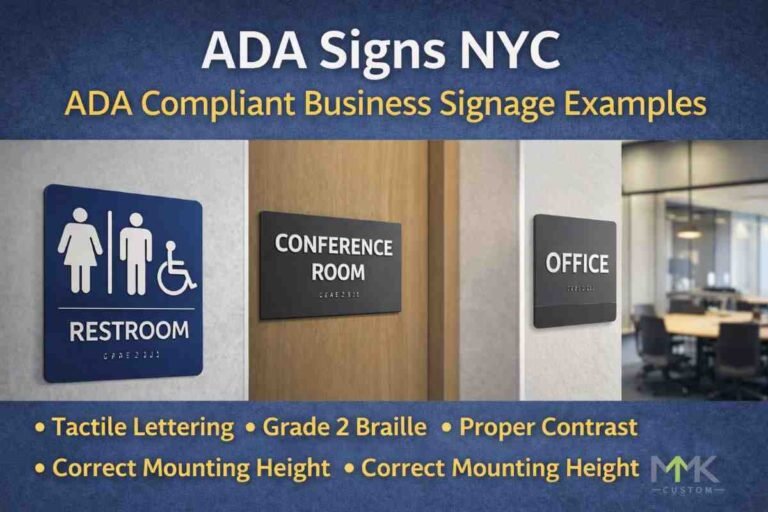
ADA requires Grade 2 Braille, placed directly below the corresponding tactile text. Incorrect Braille renders the sign non-compliant and unusable.
✅ Fix: Always use professionally fabricated ADA signs with verified Grade 2 Braille spacing and placement.
2. Improper Tactile Lettering
Another frequent error is failing to meet tactile lettering standards, such as:
- Letters that are too thin or decorative
- Letters not raised enough
- Glossy or reflective finishes
ADA Requirements Include:
- Raised characters (1/32” minimum)
- Sans-serif fonts
- Matte or non-glare finish
These details are essential for readability by touch and sight.
3. Incorrect Sign Mounting Height
Even perfectly designed signs can fail inspection if mounted incorrectly.
Common Mounting Mistakes:
- Signs placed too high or too low
- Mounted on the wrong side of the door
- Obstructed by furniture or fixtures
ADA Mounting Rules:
- Baseline of tactile text: 48”–60” from the floor
- Wall-mounted signs placed on the latch side of doors
👉 Interior placement errors are common—see compliant layouts on our office signs page.
4. Poor Color Contrast and Readability
Low contrast between text and background is a major compliance issue in NYC offices and retail spaces.
Examples of Non-Compliant Contrast:
- Light gray text on white backgrounds
- Glossy metallic finishes
- Backlit signs with glare
ADA Best Practice:
- High contrast (dark on light or light on dark)
- Non-reflective surfaces
Good contrast improves accessibility and passes inspections more easily.
5. Using Printed or Vinyl Signs Instead of Permanent ADA Signs
Temporary vinyl graphics or printed signs are not ADA-compliant for permanent spaces, like:
- Restrooms
- Conference rooms
- Offices
- Elevators
ADA requires permanent signage with raised tactile text and Braille.
✅ Fix: Replace temporary signs with professionally fabricated ADA-compliant signs.
6. Missing Required Signs Altogether
Many NYC businesses forget required ADA signs entirely, especially for:
- Restrooms
- Exit routes
- Stairwells
- Accessible entrances
Missing signs are an immediate violation, even in newly renovated spaces.
7. Not Updating Signs After Renovations or Rebranding
Renovations often change room functions, layouts, or names—but signage is overlooked.
Examples:
- Conference room renamed, but sign unchanged
- Office was converted into a restroom
- New tenant branding without ADA updates
Outdated signage can still result in fines.
How to Avoid ADA Signage Mistakes in NYC?
To stay compliant and inspection-ready:
- Work with experienced NYC signage professionals
- Use ADA-approved materials and fabrication
- Verify placement before installation
- Audit signage after renovations
👉 Our team specializes in compliant solutions—explore custom business signs NYC designed to meet both ADA and NYC building codes.
Final Thoughts
Avoiding ADA signage mistakes NYC businesses commonly make is critical for accessibility, compliance, and long-term cost savings. From Braille accuracy to proper placement, every detail matters.
If you’re unsure whether your current signage meets ADA standards, it’s better to address issues now than risk penalties later.
👉 Need expert help? Get professional guidance and compliant signage—request a quote today.