If you’re managing an office in New York City, ensuring your lobby signage meets ADA compliance isn’t just good practice—it’s the law. The Americans with Disabilities Act (ADA) mandates that all public spaces, including office buildings, provide accessible signage to help individuals with disabilities navigate safely and independently.
But how do you know if your office ADA signage in NYC is compliant? This guide walks you through the key requirements, common mistakes, and steps to verify your signage aligns with ADA standards.
1. Understand What ADA Compliance Means for Office Signs
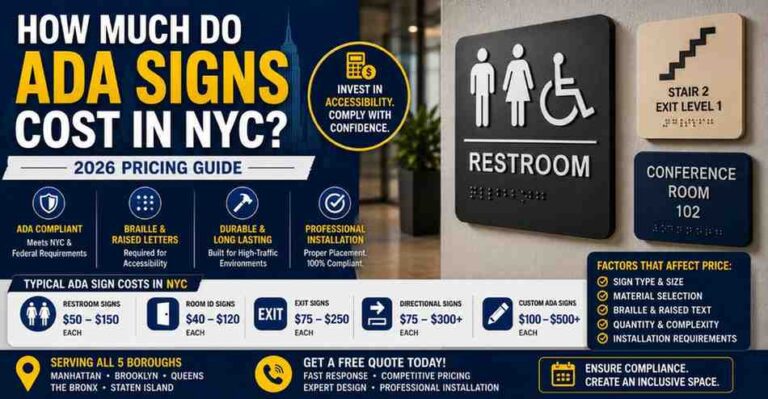
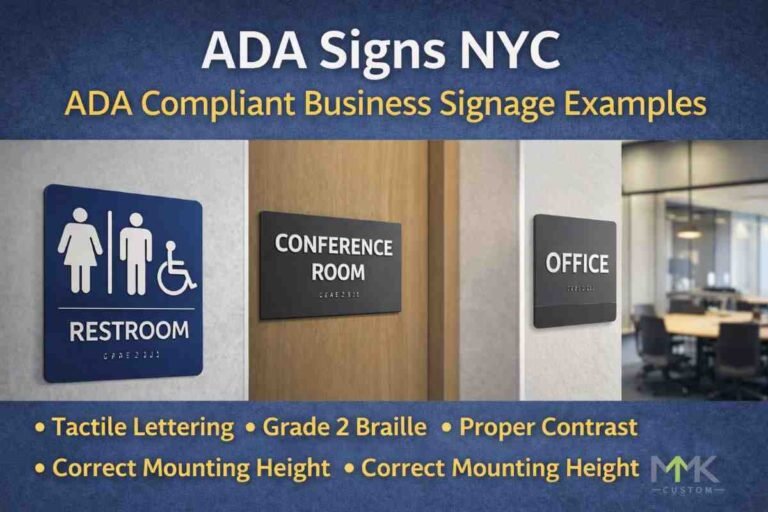
The ADA standards apply to signs that identify permanent rooms, exits, restrooms, and accessible routes. These signs must include braille, tactile lettering, and proper color contrast to ensure readability by everyone—including people with visual impairments.
Common types of ADA-compliant lobby signs include:
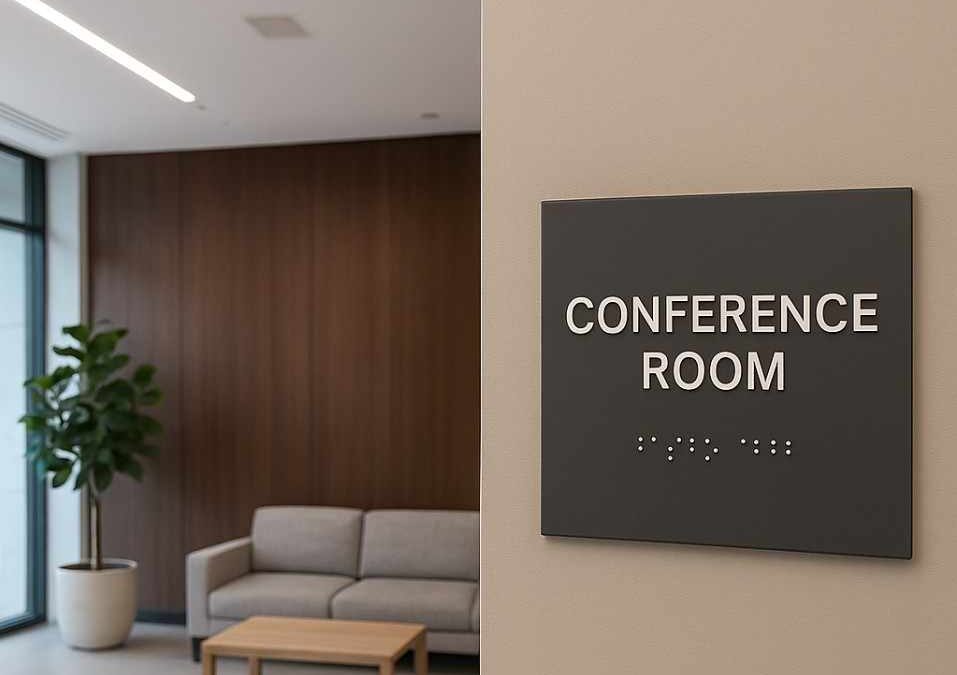
- Room identification signs (e.g., “Conference Room,” “Restroom”)
- Directional signs (e.g., arrows to elevators or exits)
- Accessible route indicators with the wheelchair symbol
👉 Learn more about ADA Signs in NYC
2. Check for Tactile Text and Braille Accuracy
One of the most critical ADA requirements for office signs is raised lettering and Grade 2 braille.
Make sure your signage includes:
- Tactile characters that are raised at least 1/32 inch above the background.
- Braille dots are positioned directly below the text, following standard spacing guidelines.
- Sans-serif fonts like Arial or Helvetica for readability.
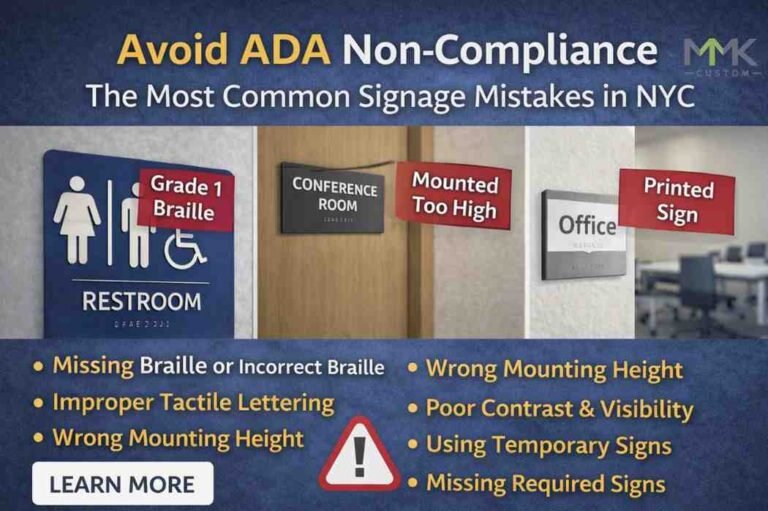
Failing to include accurate braille or using improper formatting can make your signs non-compliant and risk penalties during inspections.
3. Ensure Proper Mounting Height and Location
Your ADA office signs must be installed in locations accessible to all visitors.
The ADA requires:
- Signs are mounted on the latch side of the door.
- The baseline of tactile text is to be 48–60 inches from the floor.
- No obstructions are blocking visibility or tactile access.
These guidelines help individuals locate and read signs independently.
For interior design inspiration, check out Office Signage Ideas.
4. Use High-Contrast and Non-Glare Materials
Color and finish play an essential role in ADA compliance.
To meet visibility standards:
- Ensure 70% contrast between background and text.
- Use matte or non-glare finishes to reduce reflections.
- Avoid glossy acrylic or metal finishes in bright lighting.
For example, white text on a navy or black background is a strong ADA-approved color contrast.
5. Confirm Symbols and Pictograms Meet ADA Standards
For restrooms, exits, or accessibility routes, pictograms (symbols) are often required.
Each symbol must:
- Have a 6-inch minimum height.
- Include the corresponding tactile text below it.
- Follow universal ADA design standards.
Using inconsistent or decorative icons could confuse and lead to non-compliance.
6. Schedule an ADA Compliance Audit
If you’re unsure whether your current signage meets ADA requirements, a professional ADA sign audit can help. Experts assess every sign for tactile accuracy, positioning, and design compliance—saving you costly rework or penalties.
Our team at Signage NY offers ADA signage design, fabrication, and installation tailored to NYC building codes.
📩 Get a Free Quote for ADA-compliant office signage today.
Conclusion
ADA compliance isn’t just about following rules—it’s about creating inclusive spaces where everyone feels welcome. By ensuring your office lobby signage in NYC meets ADA standards, you not only stay compliant but also reflect professionalism, care, and attention to accessibility.
For more guidance, explore our ADA Signs NYC collection or contact our team for a consultation.