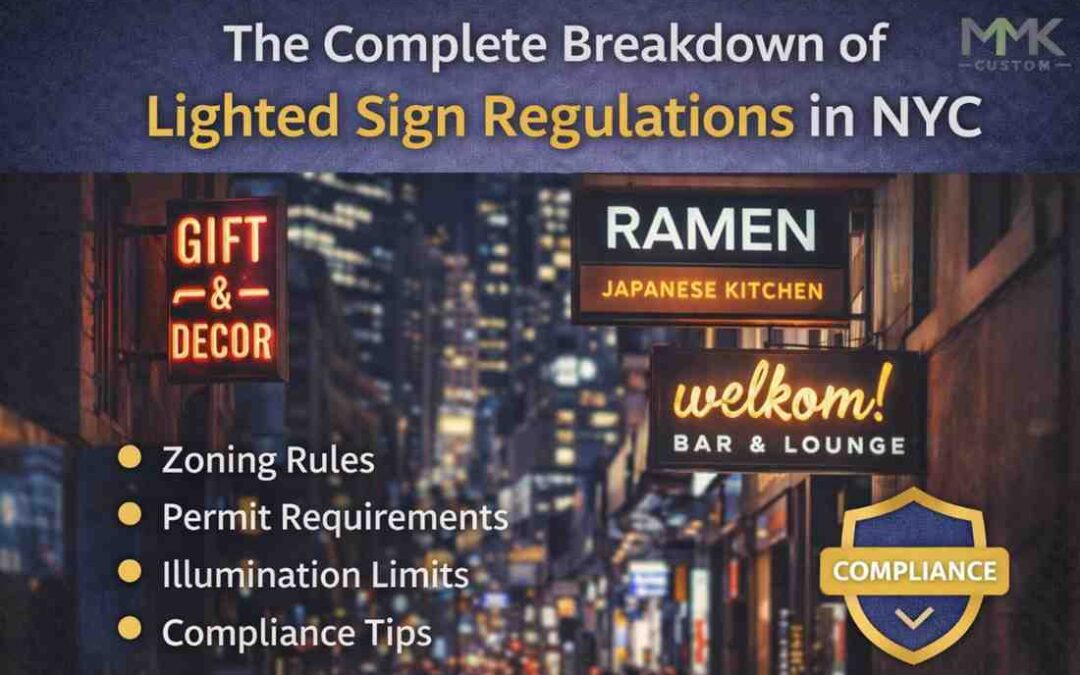
Lighted signage is one of the most powerful tools for attracting attention in New York City. From glowing storefront signs in Manhattan to illuminated business signage in Brooklyn and Queens, visibility after dark can significantly boost foot traffic. However, NYC has strict lighted sign regulations, and failing to comply can result in fines, removal orders, or permit delays.
In this guide, we break down NYC lighted sign regulations, explain what business owners must know, and share practical tips to stay compliant while maximizing visibility.
Why NYC Lighted Sign Regulations Matter?
New York City’s dense urban environment requires careful control of signage to ensure public safety, maintain neighborhood character, and reduce visual clutter. Lighted signs are regulated primarily by the NYC Department of Buildings (DOB) and zoning laws.
Non-compliant signage can lead to:
- Costly violations and penalties
- Forced sign removal
- Delays in business openings
- Legal disputes with landlords or city authorities
Understanding the rules upfront saves time, money, and frustration.
Types of Lighted Signs Allowed in NYC
NYC permits several types of illuminated signage, provided they meet zoning, size, and placement rules.
Common Approved Lighted Sign Types
- Internally illuminated signs (LED or fluorescent)
- Backlit channel letters
- Halo-lit (reverse channel) signs
- Externally lit signs using shielded fixtures
If you’re planning outdoor signage, explore compliant options under exterior business signs to ensure your sign fits both design and regulatory requirements.
NYC Zoning Rules for Lighted Signs
Zoning plays a major role in determining what type of illuminated sign you can install.
Commercial & Mixed-Use Zones
- Lighted signs are generally permitted
- Brightness levels must meet DOB standards
- Sign size is restricted based on frontage and building height
Residential Zones
- Lighted signs are highly restricted
- Only certain community facilities or home-based businesses may qualify
- Illumination intensity must be minimal
Always confirm your zoning classification before finalizing a sign design.
Brightness & Illumination Restrictions
NYC regulates the brightness of signs to prevent glare and light pollution.
Key Illumination Rules
- Signs must not create hazardous glare for drivers or pedestrians
- Illumination must be evenly distributed
- Flashing, blinking, or animated lighting is generally prohibited
- LED signs must have controlled luminance levels
Choosing the right materials and lighting systems through custom signs helps ensure compliance while maintaining high visibility.
Permit & Approval Requirements
Most lighted signs in NYC require permits before installation.
When a Permit Is Required
- New illuminated signs
- Changes to existing lighting or size
- Structural mounting on building façades
Permits typically involve:
- DOB filings
- Electrical sign-off
- Landmark Preservation Commission (LPC) approval (if applicable)
Businesses can streamline approvals by following a structured design to permit the installation sign process, ensuring every step meets NYC compliance standards.
Special Rules for Landmark & Historic Districts
If your business is located in a landmarked building or historic district, additional restrictions apply.
Landmark Area Sign Rules
- Limited illumination types allowed
- Traditional or subtle lighting preferred
- Strict design review by LPC
Non-compliant signs in landmark zones are often denied, so planning early is essential.
Common Mistakes Businesses Make with Lighted Signs
Avoid these frequent issues that lead to violations:
- Installing signs before permit approval
- Using overly bright or flashing LEDs
- Ignoring zoning restrictions
- Mounting signs beyond allowed dimensions
- Failing to meet electrical safety standards
A professionally designed and installed sign ensures both compliance and longevity.
How to Stay Compliant Without Sacrificing Visibility?
The key is striking a balance between eye-catching design and NYC regulations.
Best Practices
- Use energy-efficient LED lighting
- Opt for halo-lit or backlit letters
- Match the sign scale to the storefront size
- Choose compliant materials and finishes
- Partner with a NYC-based signage expert
Following a proven design to permit the installation workflow helps businesses avoid costly mistakes and ensures a smooth approval process from start to finish.
Get Expert Help with NYC Lighted Sign Regulations
Navigating NYC lighted sign regulations doesn’t have to be overwhelming. Working with professionals who understand local zoning, DOB requirements, and design standards ensures a smooth process from concept to installation.
If you’re planning a new illuminated sign or upgrading an existing one, get a quote today and ensure your signage is fully compliant, visually striking, and built to last.
Final Thoughts
Lighted signage can transform your storefront visibility in New York City—but only when done correctly. By understanding NYC lighted sign regulations, following zoning requirements, and choosing compliant sign types, businesses can stand out confidently and legally in one of the most competitive markets in the world.