If you’re a property owner, landlord, developer, tenant, or business owner planning signage for a commercial building in New York City, one of the first questions you’re likely to ask is:
How much does a building sign cost in NYC?
The answer can range from a few hundred dollars for a simple sign to tens of thousands of dollars for a large, illuminated building sign.
That’s because building signage is rarely priced by size alone. The material, illumination, installation height, structural requirements, electrical work, access equipment, permits, and design all affect the final cost.
For a commercial property, a realistic planning budget can often fall somewhere between $1,500 and $25,000+, while large architectural or high-rise building signs can go considerably higher.
In this guide, we’ll break down the major cost factors so you can better understand what you may need to budget for your NYC building sign.
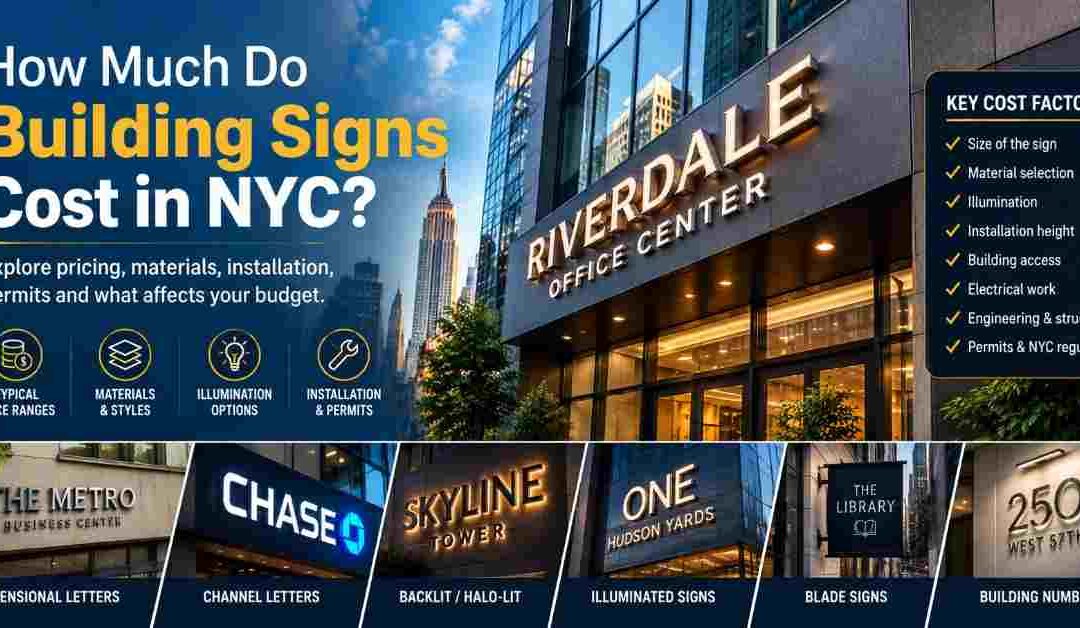
How Much Do Building Signs Cost in NYC?
As a general planning guide, building signage can fall into these approximate ranges:
| Building Sign Type | Typical Planning Range |
|---|---|
| Simple non-illuminated building sign | $500–$2,000+ |
| Dimensional letters | $1,500–$6,000+ |
| Metal building letters | $2,000–$8,000+ |
| Channel letter building sign | $3,000–$12,000+ |
| Backlit/illuminated dimensional letters | $4,000–$15,000+ |
| Large illuminated building sign | $8,000–$25,000+ |
| Large architectural/high-rise signage | $15,000–$50,000+ |
These are broad planning ranges, not fixed NYC prices. A specific project can cost less or substantially more depending on dimensions, materials, installation conditions, engineering, electrical work, permitting, and access requirements.
For example, a 6-foot-wide dimensional logo installed at ground level is a completely different project from a 20-foot-wide illuminated logo installed several stories above a Manhattan sidewalk.
What Determines the Cost of a Building Sign?
Several factors can significantly change your final quote.
1. Size of the Sign
Size is one of the most obvious cost factors.
A small building logo may require only a few individual letters, while a large commercial property could require a sign several feet wide or tall.
Larger signs typically require:
- More material
- More fabrication
- More mounting hardware
- More labor
- More transportation
- More installation time
- Potentially additional engineering
However, larger does not automatically mean more expensive per square foot. The construction method and installation conditions matter just as much.
2. Sign Material
The material you choose affects both appearance and price.
Common building-sign materials include:
Aluminum
Aluminum is popular for exterior signage because it is lightweight and suitable for outdoor applications.
It can be painted, coated, cut into shapes, or fabricated into dimensional letters.
Acrylic
Acrylic can provide a clean, modern appearance and is often used for dimensional or illuminated signage.
Stainless Steel
Stainless steel is commonly chosen for premium commercial properties where durability and a sophisticated appearance are important.
Brass or Bronze
These materials can create a high-end architectural appearance, particularly for luxury buildings, professional offices, and historic-style properties.
PVC or Other Synthetic Materials
These can provide a more economical option for certain dimensional-letter applications.
The right material depends on the building’s architecture, desired lifespan, location, exposure, and brand style—not simply the lowest initial price.
3. Illumination
Adding lighting can significantly increase the cost of a building sign.
Common illuminated options include:
- Front-lit channel letters
- Backlit letters
- Halo-lit dimensional letters
- Internally illuminated cabinets
- LED logo signs
- Combination illuminated signs
For example, a simple set of non-illuminated metal letters may have a significantly lower project cost than the same logo fabricated with internal LED illumination and installed several stories above street level.
Illumination can also make a building sign more visible during evening hours.
If you’re comparing illuminated options, you can also review our guide to LED business sign costs.
4. Installation Height
This is particularly important for NYC building signage.
Installing a sign at street level is generally much simpler than installing one several floors above the sidewalk.
A higher installation may require:
- Lifts
- Scaffolding
- Rigging
- Specialized installation equipment
- Additional labor
- Traffic or pedestrian considerations
- Building access coordination
A sign that costs $5,000 to fabricate could therefore have a substantially higher total project cost if installation requires specialized equipment.
5. Building Access
How installers reach the installation location can make a major difference.
For example, consider two identical signs:
Building A: The sign is installed at the ground-floor façade and can be accessed easily.
Building B: The sign is installed several stories above the sidewalk and requires specialized access equipment.
The signs themselves might cost approximately the same to fabricate, but the installation portion of the projects could be very different.
6. Electrical Work
Illuminated signs require electrical components and connections.
Depending on the project, costs may include:
- LED modules
- Power supplies
- Wiring
- Electrical connections
- Licensed electrician labor
- Electrical permits
- Testing
NYC Department of Buildings guidance states that a proposed sign requiring an electrical connection requires a separate electrical work permit filed by a licensed electrician through DOB NOW: Build.
7. Engineering and Structural Requirements
Large building signs aren’t simply attached to a wall without considering the structure.
Depending on the size and weight of the sign, the building façade and mounting system may need additional review.
NYC’s installation guidance states that larger business signs—over 150 square feet or 300 pounds—require a registered design professional to act as the applicant for the sign permit.
This is one reason why a large building sign can move from a relatively straightforward signage project into a more complex architectural installation.
8. Permits and NYC Regulations
Before installing a building sign in NYC, you need to determine which permits and approvals apply.
NYC Department of Buildings states that signs must comply with the NYC Construction Codes, NYC Zoning Resolution, and Rules of the City of New York.
For many signs, the process can involve a combination of:
- Sign permit
- Structural/alteration permit
- Electrical permit
- Annual illuminated sign permit, when applicable
The exact requirements depend on the sign and property.
NYC also notes that signs larger than six square feet generally require a permit, although there are specific exceptions.
For a current project, always verify the requirements with NYC DOB and the applicable zoning rules rather than relying on a generic cost estimate.
9. Annual Illuminated Sign Requirements
If you’re considering a large illuminated building sign, don’t look only at the initial installation price.
NYC DOB states that an illuminated sign that extends beyond the building line may require an annual illuminated sign permit. The permit fee is based on the type and dimensions of the sign.
This means illuminated signage can involve an ongoing cost in addition to fabrication and installation.
Building Sign Cost by Type
Non-Illuminated Building Signs
These are generally among the more economical options.
Examples include:
- Flat aluminum panels
- Cut vinyl
- Dimensional PVC letters
- Non-illuminated metal letters
- Acrylic letters
Planning range: approximately $500–$2,000+
These can work well for smaller commercial buildings, tenant identification, and straightforward property signage.
Dimensional Building Letters
Dimensional letters provide more depth than a flat panel and can create a much more architectural appearance.
Materials can include:
- Acrylic
- Aluminum
- Stainless steel
- Brass
- Bronze
- PVC
Planning range: approximately $1,500–$8,000+
The cost depends heavily on letter size, material, thickness, finish, quantity, and installation.
Channel Letter Building Signs
Channel letters are frequently used when businesses want strong visibility and illumination.
They can be:
- Front illuminated
- Back illuminated
- Combination illuminated
- Non-illuminated
Planning range: approximately $3,000–$12,000+
Large-scale channel-letter installations can cost substantially more.
For businesses considering this style, our complete guide to channel letters in NYC covers styles, costs, installation, and permits in greater detail.
Illuminated Building Signs
For commercial properties that need visibility after dark, illuminated signage can be a strong option.
Popular choices include:
Front-Lit Letters
LED illumination shines toward the viewer.
Halo-Lit Letters
Light shines behind the letters, creating a glow around the edges.
Internally Illuminated Logos
The entire logo or sign face can be illuminated.
LED Cabinet Signs
These can provide a larger illuminated display for certain applications.
Planning range: approximately $4,000–$25,000+, depending on size and complexity.
Why Manhattan Building Signs Can Cost More
Manhattan presents some unique installation challenges.
A building sign project may involve:
- Limited street access
- Dense pedestrian traffic
- Restricted work areas
- Taller buildings
- Difficult equipment access
- Building management requirements
- Historic or special-district considerations
- More complicated installation logistics
That doesn’t mean every Manhattan sign is automatically more expensive.
It means the installation environment can have a major impact on the final quote.
Are Building Signs Worth the Investment?
For commercial property owners and businesses, a building sign can be more than just identification.
A well-designed sign can help:
- Improve visibility: A prominent building sign can make a business easier to locate.
- Strengthen branding: Dimensional and illuminated signage can give a commercial property a more established appearance.
- Improve tenant visibility: For multi-tenant properties, building signage can help visitors identify businesses and entrances.
- Create a professional appearance: A well-fabricated sign can complement the architecture of the building rather than simply adding another advertisement.
- Provide long-term value: Unlike temporary advertising, a permanent building sign can continue working for the business for years.
How to Reduce Your Building Sign Cost
You don’t necessarily have to choose the cheapest material to control your budget.
Instead, consider these strategies.
Choose the right sign size
A larger sign isn’t always more effective.
The goal is to achieve enough visibility without creating unnecessary fabrication and installation costs.
Compare illuminated and non-illuminated options
If your business operates primarily during daylight hours, illumination may not provide enough additional value to justify the extra investment.
For restaurants, retail businesses, hotels, and businesses operating into the evening, however, illumination may be worthwhile.
Select materials based on the building
Premium stainless steel may look excellent, but it isn’t necessarily required for every property.
Design around installation requirements
A sign that’s unnecessarily complicated to install can increase labor and equipment costs.
Plan permits early
Permit and zoning considerations should be addressed before fabrication begins.
A redesign after fabrication has started can be significantly more expensive than designing around the requirements from the beginning.
Building Sign vs Storefront Sign: What’s the Difference?
A storefront sign generally identifies a business at street level.
A building sign can be larger, higher, more architectural, or designed to identify a business or property from a greater distance.
For example:
Storefront signage: A 10-foot-wide business sign above a retail entrance.
Building signage: A 20-foot-wide illuminated company logo installed several stories above the street.
The second project may require considerably more planning, engineering, equipment, and installation work.
If your project is primarily at street level, you may also want to review our guide to storefront sign costs in NYC.
What Should You Budget for a NYC Building Sign?
For a typical commercial project, I would think about the budget in tiers:
Under $2,000
Best suited to simple, smaller, non-illuminated signage.
$2,000–$6,000
Good range for many dimensional-letter and moderate custom-sign projects.
$6,000–$15,000
More appropriate for larger dimensional, illuminated, or premium-material installations.
$15,000–$25,000+
Large illuminated building signage, complex installations, or projects with significant access requirements.
$25,000+
Large architectural signs, high-rise installations, complex structures, premium materials, or projects requiring substantial engineering and specialized installation.
These are budgeting ranges rather than guaranteed quotes. The actual price should be determined after reviewing the building, sign dimensions, materials, installation location, access, and applicable requirements.
What Information Do You Need for an Accurate Building Sign Quote?
Before requesting a quote, it helps to provide:
- Building address
- Desired sign location
- Approximate sign dimensions
- Logo or artwork
- Preferred material
- Whether illumination is required
- Photos of the building façade
- Installation height
- Desired installation date
- Whether the property has existing signage
- Any building-management requirements
If you already have architectural drawings or a rendering, include those as well.
The more information available during the quoting process, the easier it is to identify potential fabrication and installation requirements.
Frequently Asked Questions
How much does a building sign cost in NYC?
Building signs can range from roughly $500 for simple signage to $25,000 or more for large illuminated installations. Large architectural and high-rise projects can exceed $50,000 depending on size, materials, engineering, access, and installation requirements.
What is the cheapest type of building sign?
Simple non-illuminated aluminum panels, vinyl graphics, or basic dimensional letters are generally among the more economical options. The best choice depends on the building and desired appearance.
How much do illuminated building signs cost?
A typical illuminated building sign may cost approximately $4,000–$25,000+, depending on size, materials, illumination method, installation height, electrical requirements, and access.
Do building signs require a permit in NYC?
Many building signs require permits. NYC DOB states that most business signs require a permit, with specific exceptions, including certain small non-illuminated signs.
Does NYC require a licensed sign installer?
NYC requires a licensed Sign Hanger to perform or directly supervise many sign installations, subject to specific exemptions.
Are illuminated building signs more expensive?
Usually, yes. In addition to fabrication, illuminated signs can involve LED components, electrical work, installation, and applicable permits.
Can building signs be customized?
Yes. Building signs can be customized in terms of dimensions, materials, finishes, lettering, logos, colors, illumination, and mounting methods.
Final Thoughts
The cost of a building sign in NYC depends on much more than the size of the logo.
Material + size + illumination + installation height + access + electrical work + engineering + permits all contribute to the final investment.
For a small commercial property, a simple dimensional sign may be enough. For a prominent Manhattan building, a large illuminated logo or architectural sign may justify a much larger investment.
The smartest approach is to choose a sign that fits your building architecture, visibility requirements, brand, and budget rather than simply choosing the largest sign possible.
If you’re planning a new commercial building sign in Manhattan, Brooklyn, Queens, the Bronx, or Staten Island, start with the building itself and determine what type of signage will provide the best visibility and long-term value.
Ready to plan your building sign? Get a Fast Quote