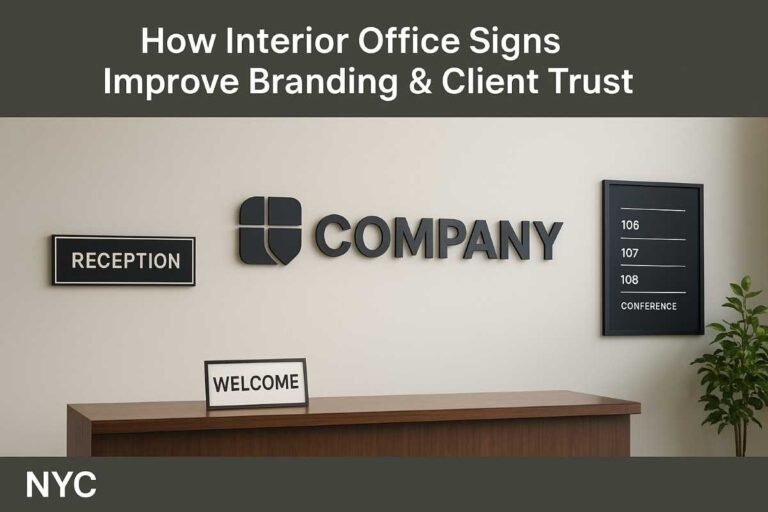
Interior signage plays a crucial role in shaping the professional image of a corporate office. From the moment clients, partners, or employees walk into your workspace, your signage communicates brand identity, organization, and attention to detail. Choosing the right materials for interior signs ensures durability, aesthetic appeal, and consistency with your brand’s visual identity.
In professional environments such as offices in New York City, businesses often prioritize modern, high-quality signage materials that reflect professionalism and create a welcoming atmosphere.
If you’re considering upgrading your workplace branding, exploring professional interior office signage solutions is a great starting point.
Why Interior Sign Materials Matter?
The material used for interior signage directly affects its appearance, durability, and perceived value. High-quality materials not only enhance office aesthetics but also reinforce brand credibility.
Key benefits of selecting the right interior sign material include:
- Creating a professional and polished office environment
- Strengthening brand identity through design consistency
- Improving navigation with clear wayfinding signage
- Enhancing the client and employee experience
- Ensuring long-lasting durability with minimal maintenance
Many corporate offices invest in custom signage to match their brand colors, logo, and office design. Businesses interested in tailored signage solutions can explore custom options here.
Top Interior Sign Materials for Corporate Offices
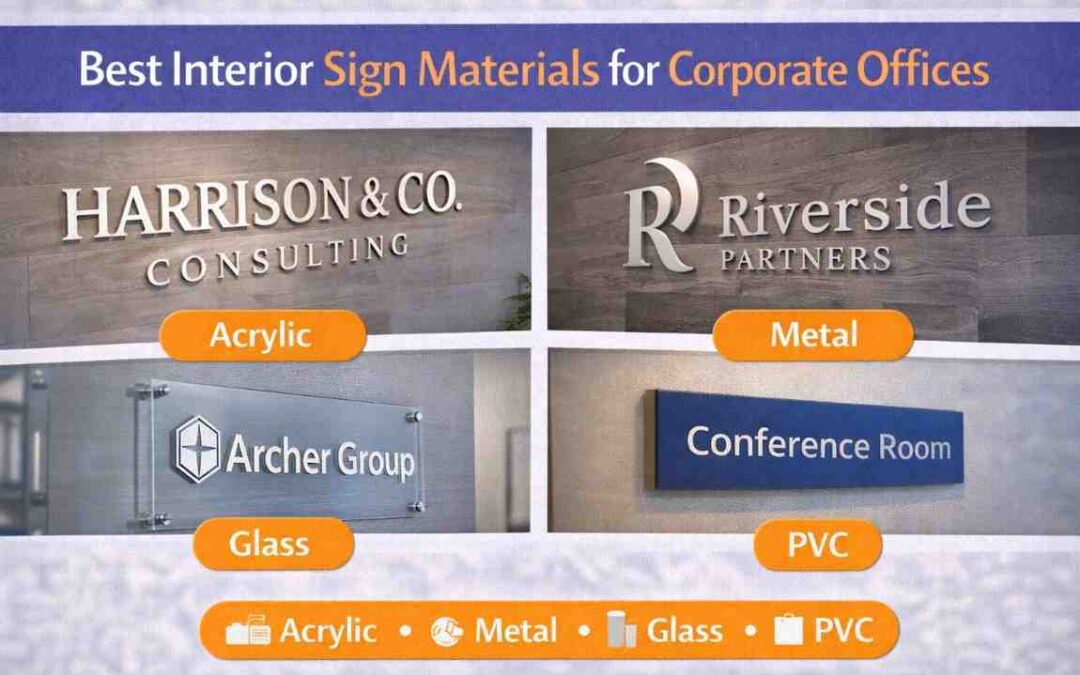
Different materials offer unique visual effects and functional advantages. Below are some of the most popular and effective materials used in corporate office signage.
1. Acrylic Signs
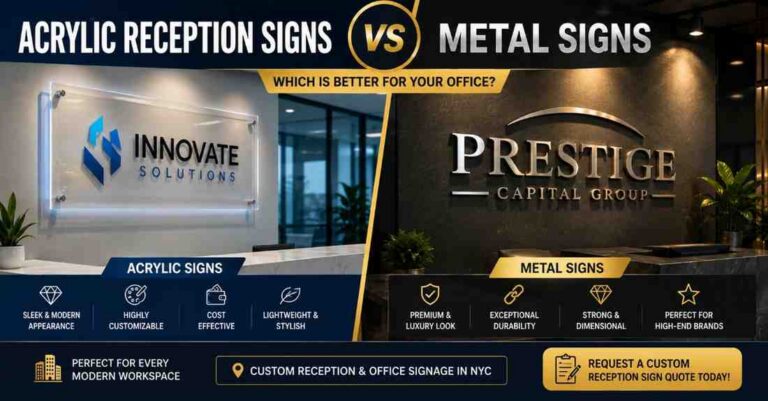
Acrylic is one of the most widely used materials for modern office signage. Known for its sleek, glass-like appearance, acrylic offers a clean and contemporary look that fits well in corporate environments.
Advantages of Acrylic Signs
- Elegant and professional appearance
- Lightweight yet durable
- Available in clear, frosted, or colored finishes
- Ideal for dimensional lettering and logo displays
Acrylic signs are commonly used for lobby signs, directory boards, and office nameplates, making them a versatile choice for corporate interiors.
2. Metal Signs
Metal signage adds a sophisticated and high-end feel to corporate offices. Materials such as aluminum, stainless steel, and brushed metal create a sleek and modern look.
Advantages of Metal Signs
- Extremely durable and long-lasting
- Premium and professional appearance
- Resistant to wear and corrosion
- Ideal for minimalist or contemporary office designs
Metal signs are frequently used in reception areas, executive offices, and conference rooms to create a strong brand impression.
3. Glass Signs
Glass signage is often used in high-end corporate environments where a refined and luxurious aesthetic is desired.
Advantages of Glass Signs
- Elegant and upscale appearance
- Perfect for modern office interiors
- Can be paired with etched or frosted designs
- Enhances natural light in office spaces
Glass signs are commonly installed in conference rooms, office entrances, and reception areas.
4. PVC Signs
PVC (polyvinyl chloride) is a lightweight and cost-effective material used for many interior signage applications.
Advantages of PVC Signs
- Affordable yet durable
- Easy to customize with graphics or lettering
- Lightweight and easy to install
- Suitable for directional and informational signage
PVC is often used for wayfinding signs, department labels, and office directories.
5. Dimensional Lettering
Dimensional letters are a popular choice for corporate office branding because they add depth and visual impact to walls.
Advantages of Dimensional Letter Signs
- Creates a bold, professional look
- Highly customizable in size and materials
- Enhances brand visibility in office spaces
- Works well for lobby and reception signage
These signs are especially effective in reception areas where businesses want to make a memorable first impression.
For businesses looking to enhance their lobby branding, reception signage solutions can be explored here.
Best Sign Materials for Different Office Areas
Different parts of the office require different signage materials. Choosing the right material for each space improves both functionality and visual consistency.
Reception Area
The reception area is often the first place clients see, making it one of the most important areas for branding.
Recommended materials:
- Acrylic dimensional logos
- Metal lettering
- Glass signage
These materials create a modern and professional look that reinforces brand credibility.
Conference Rooms
Conference room signage should be clear, professional, and easy to read.
Recommended materials:
- Frosted glass signs
- Acrylic panels
- Metal room plaques
These materials maintain a clean and professional environment.
Hallways and Wayfinding
Wayfinding signage helps visitors and employees navigate the office efficiently.
Recommended materials:
- PVC signs
- Acrylic panels
- Vinyl wall graphics
These options are durable and cost-effective for informational signage.
Executive Offices
Executive offices often require more refined signage that reflects professionalism and status.
Recommended materials:
- Metal nameplates
- Glass office signs
- Dimensional lettering
These materials convey authority and professionalism.
Factors to Consider When Choosing Interior Sign Materials
Before selecting signage materials, businesses should consider several important factors.
1. Brand Identity: Your signage should match your company’s colors, fonts, and overall design aesthetic.
2. Office Design Style: Modern offices often prefer materials like acrylic, metal, and glass that create a sleek look.
3. Durability: Corporate signage should be durable enough to withstand daily wear.
4. Budget: Some materials offer a premium look while remaining budget-friendly.
5. Maintenance: Choose materials that are easy to clean and maintain.
The Importance of Custom Corporate Signage
Custom interior signage allows businesses to align signage with their brand identity and office design.
Benefits of custom signage include:
- Unique branding tailored to your company
- Professional and cohesive office aesthetics
- Improved customer and employee experience
- Long-lasting marketing and branding value
Enhance Your Office with Professional Interior Signage
Interior signage does more than display names and directions—it creates a branded environment that reflects your company’s professionalism and culture. From acrylic lobby signs to elegant metal lettering, the right materials can transform a corporate office into a visually impressive and organized workspace.
If your business is located in New York City or the surrounding areas, working with a professional signage company ensures high-quality design, fabrication, and installation.
Final Thoughts
Selecting the best interior sign materials for corporate offices is an important part of building a professional and welcoming workspace. Materials like acrylic, metal, glass, PVC, and dimensional lettering each offer unique benefits that can enhance branding and improve office navigation.
By investing in high-quality interior signage, businesses can create an environment that reflects professionalism, reinforces brand identity, and improves the overall experience for both employees and visitors.