
Whether you’re opening a new office, renovating a commercial space, or preparing for a building inspection, installing ADA-compliant signage is an essential part of meeting accessibility requirements in New York City.
One of the first questions business owners, property managers, and contractors ask is: “How much do ADA signs cost in NYC?”
The answer depends on several factors, including the type of sign, materials, customization, Braille requirements, quantity, and professional installation.
In this pricing guide, we’ll break down the average cost of ADA signs in NYC, explain what affects pricing, and help you budget for your next signage project.
If you’re unsure whether your business needs ADA signage, start with our guide on What Is ADA Signage and Why It’s Required for NYC Businesses.
Average ADA Sign Costs in NYC
While every project is unique, the following ranges provide a realistic estimate for most commercial properties.
| ADA Sign Type | Typical Cost |
|---|---|
| Standard ADA Door Signs | $40–$120 each |
| ADA Restroom Signs | $50–$150 each |
| Braille Room Identification Signs | $60–$180 each |
| Exit & Stairwell ADA Signs | $75–$250 each |
| Directional ADA Signs | $75–$300 each |
| Custom ADA Signs | $100–$500+ each |
Large projects involving dozens or hundreds of signs generally benefit from lower per-sign pricing.
What Affects the Cost of ADA Signs?
Several factors influence the total cost of an ADA signage project.
1. Type of ADA Sign
Not all ADA signs are the same.
Common types include:
- Restroom signs
- Room identification signs
- Exit signs
- Stairwell signs
- Elevator signs
- Wayfinding signs
- Directional signs
Larger signs with more text, graphics, or tactile elements typically cost more than simple room identification signs.
2. Material Selection
The material used significantly impacts pricing.
Common ADA sign materials include:
Acrylic
Acrylic signs are among the most popular choices because they offer:
- Modern appearance
- Excellent durability
- Easy maintenance
- Professional finish
They’re widely used in offices, healthcare facilities, and commercial buildings.
Aluminum
Aluminum signs provide:
- Exceptional durability
- Corrosion resistance
- Long lifespan
Ideal for areas that experience heavy use.
Photopolymer
Photopolymer signs are manufactured with permanently raised characters and Braille.
They offer excellent durability and are often chosen for hospitals, universities, and government buildings.
PVC and Composite Materials
These materials are cost-effective while still providing ADA-compliant solutions for many commercial applications.
Braille Requirements
One of the biggest factors affecting cost is Braille.
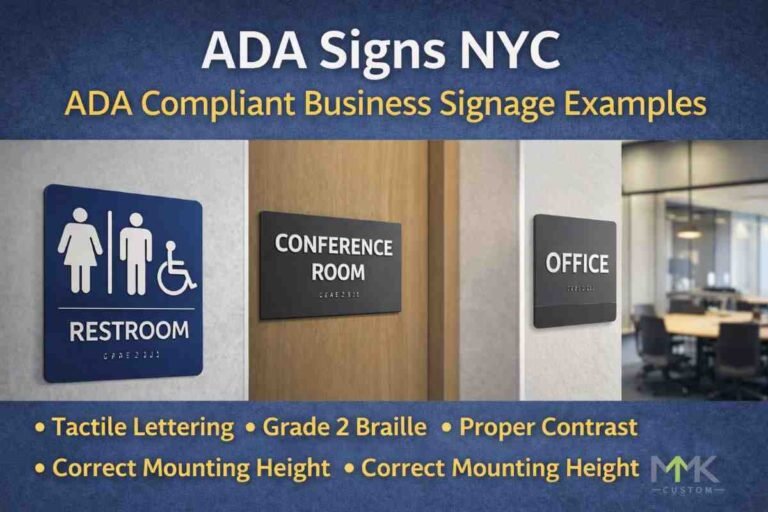
Most permanent room identification signs require:
- Raised lettering
- Grade 2 Braille
- Proper tactile spacing
- ADA-compliant dimensions
Adding Braille increases manufacturing complexity, but it’s essential for compliance.
For a detailed overview of current regulations, read our NYC ADA Signage Requirements guide.
Custom vs Standard ADA Signs
Standard ADA Signs
Pre-designed signs are generally the most affordable option.
Examples include:
- Restrooms
- Exit signs
- Stairwells
- Electrical rooms
Custom ADA Signs
Custom signs may include:
- Company branding
- Logos
- Custom colors
- Room names
- Suite numbers
- Department names
Although custom signs cost more, they create a more cohesive and professional environment.
Quantity Matters
Businesses ordering multiple signs usually receive better pricing.
Examples include:
- Office buildings
- Apartment complexes
- Medical facilities
- Hotels
- Schools
- Retail chains
Ordering your complete signage package at once often reduces production and installation costs.
Installation Costs
Professional installation is recommended to ensure ADA compliance.
Installation pricing depends on:
- Number of signs
- Mounting surfaces
- Building accessibility
- Project size
- Travel time
Incorrect placement can result in compliance issues and costly reinstallation.
Why Proper Placement Matters?
Installing an ADA sign in the wrong location can make it non-compliant—even if the sign itself meets all design requirements.
Signs must be mounted at the correct:
- Height
- Distance from doors
- Viewing location
Improper placement is one of the most common compliance issues in commercial buildings.
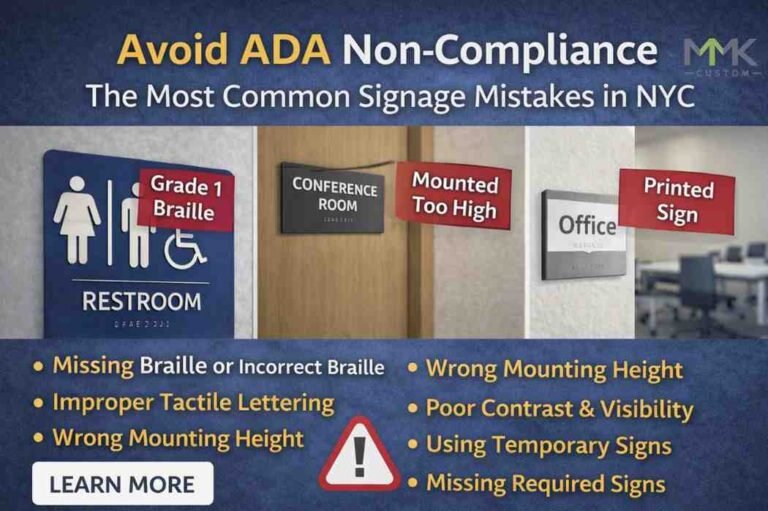
Learn how to avoid these problems by reading ADA Signage Mistakes in NYC.
Are ADA Signs Worth the Investment?
Absolutely.
ADA signage offers benefits beyond compliance.
Professionally designed signs help:
- Improve accessibility
- Create a better visitor experience
- Enhance navigation
- Reduce confusion
- Present a professional image
- Support legal compliance
For businesses serving the public, ADA signage is both a legal requirement and a valuable customer service investment.
Industries That Need ADA Signs
Almost every commercial property requires ADA signage.
Common examples include:
- Office buildings
- Medical offices
- Dental clinics
- Retail stores
- Restaurants
- Hotels
- Apartment buildings
- Schools
- Government facilities
- Fitness centers
- Banks
Whether you’re opening a new business or remodeling an existing property, ADA signs should be part of your project from the beginning.
How to Save Money on ADA Signage?
You don’t have to sacrifice quality to stay within budget.
Here are a few ways to reduce costs:
- Order All Signs Together: Bulk production generally lowers the cost per sign.
- Standardize Designs: Using consistent layouts and materials helps streamline manufacturing.
- Choose Durable Materials: High-quality materials often last longer and reduce replacement costs.
- Work with an Experienced ADA Sign Company: Professional guidance helps prevent costly mistakes and ensures compliance from day one.
Why NYC Businesses Choose Professional ADA Sign Companies?
ADA signage isn’t just about producing signs—it’s about ensuring they comply with accessibility standards and local regulations.
Working with an experienced sign company helps ensure:
- Proper Braille
- Correct tactile lettering
- ADA-compliant sizing
- Accurate installation
- Long-lasting materials
Our ADA Signs NYC team works with architects, contractors, property managers, and business owners to design, fabricate, and install compliant signage throughout New York City.
Get a Free ADA Sign Quote
Every commercial space has unique ADA signage requirements.
Whether you need:
- Braille room signs
- Restroom signs
- Exit signs
- Directional signs
- Office identification signs
- Complete ADA signage packages
our team can help you create a compliant solution tailored to your building.
Contact SignageNY today for a free consultation and customized ADA signage quote.
Frequently Asked Questions
How much do ADA signs cost in NYC?
Most ADA signs cost between $40 and $300+ per sign, depending on the material, Braille requirements, customization, and installation.
Why are ADA signs more expensive than regular signs?
ADA signs require raised tactile lettering, Grade 2 Braille, precise spacing, and compliant manufacturing standards, making them more specialized than standard signs.
Are ADA signs legally required?
Yes. Most commercial buildings that serve the public are required to install ADA-compliant signage in accordance with accessibility regulations.
Can I customize ADA signs with my logo?
Yes. Many ADA signs can incorporate branding while still meeting accessibility requirements.
Who installs ADA signs in NYC?
Professional sign companies typically provide design, fabrication, and installation services to ensure the signs meet both ADA standards and local building requirements.