Ensuring your business complies with ADA signage requirements in NYC isn’t just about following regulations—it’s about creating an inclusive, accessible environment for everyone. From office buildings and retail stores to medical facilities and restaurants, ADA-compliant signs are legally required across New York City.
In this guide, we break down the ADA signs NYC requirements, explain where they’re needed, and share real-world examples to help you stay compliant and avoid costly violations.
What Are ADA Signs and Why Are They Mandatory in NYC?
ADA signs are regulated under the Americans with Disabilities Act (ADA), ensuring people with visual, mobility, or cognitive impairments can safely and independently navigate public spaces.
In NYC, ADA signage compliance is strictly enforced by city inspectors and often reviewed during:
- New business openings
- Renovations or fit-outs
- Department of Buildings (DOB) inspections
- Commercial lease approvals
Failure to comply can result in fines, delays, or failed inspections.
👉 Learn more about compliant options on our dedicated page for ADA signs NYC.
Core ADA Signage Requirements in NYC
1. Raised Characters (Tactile Text)
ADA signs must include:
- Raised letters at least 1/32 inch
- Sans-serif fonts (e.g., Helvetica, Arial)
- Uppercase characters for room names
- Proper spacing between letters
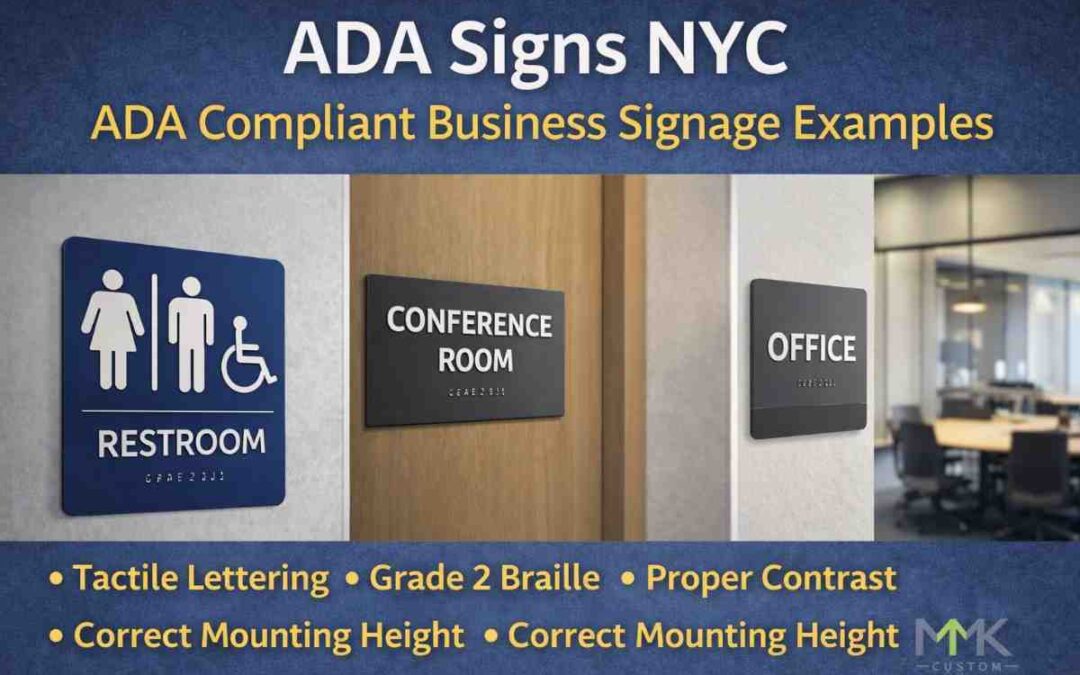
Example: A restroom sign reading “RESTROOM” with raised lettering, mounted next to the door handle.
2. Braille (Grade 2 Only)
All permanent room signs must include Grade 2 Braille, placed:
- Directly below the tactile text
- Without abbreviations
- Spaced correctly to allow touch reading
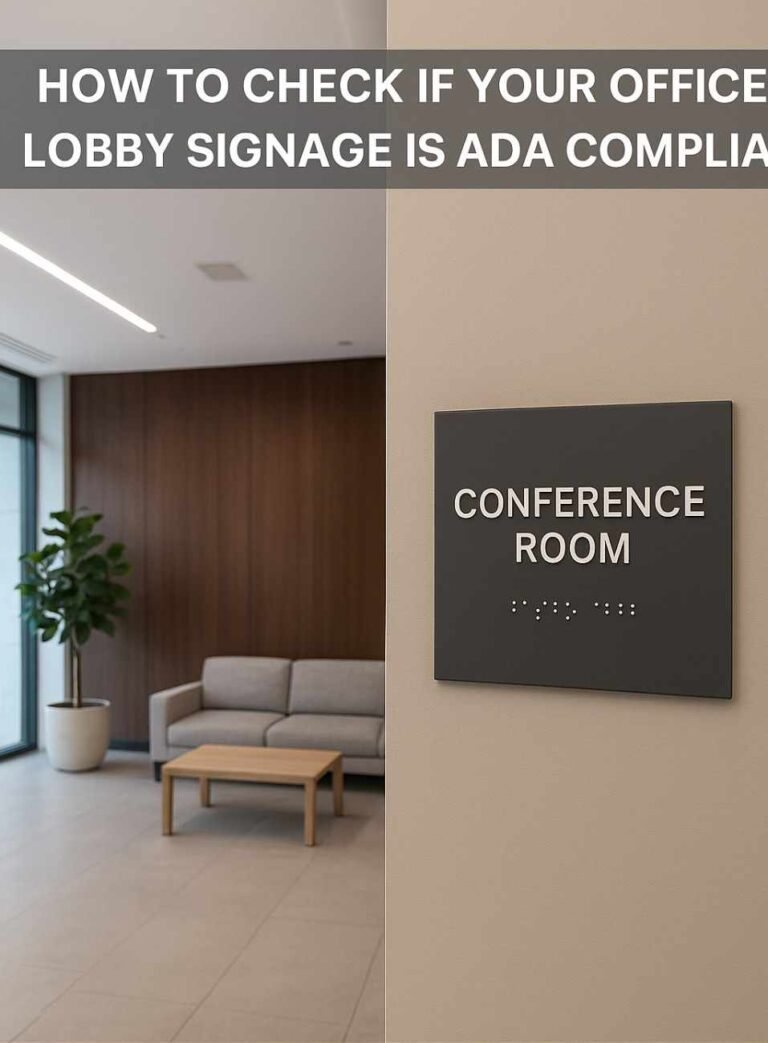
Example: Conference room signage with tactile letters and Braille underneath for visually impaired users.
3. High Contrast & Non-Glare Finish
To ensure visibility:
- Text must contrast clearly with the background (light on dark or vice versa)
- Matte or non-gloss finishes are required
- No reflective materials allowed
Example: White text on a matte black background for office room identifiers.
4. Correct Mounting Height & Placement
ADA signs must be installed:
- On the latch side of the door
- Between 48–60 inches from the floor (to tactile baseline)
- Clear of obstructions
Example: Office directory signage is placed consistently at compliant heights throughout a building.
Where ADA Signs Are Required in NYC Buildings?
ADA signage is required for all permanent spaces, including:
- Restrooms
- Offices & meeting rooms
- Stairwells & elevators
- Exits & emergency routes
- Reception areas
- Interior wayfinding
For cohesive branding and compliance, many NYC businesses pair ADA signage with professionally designed interior office signs.
ADA vs Decorative Signage: What’s the Difference?
| Feature | ADA Signs | Decorative Signs |
|---|---|---|
| Raised Text | Required | Optional |
| Braille | Mandatory | Not required |
| Contrast Rules | Strict | Flexible |
| Mounting Height | Regulated | Flexible |
| Inspection Approved | Yes | No |
Important: Decorative signs cannot replace ADA-compliant signage in required areas.
Common ADA Signage Mistakes NYC Businesses Make
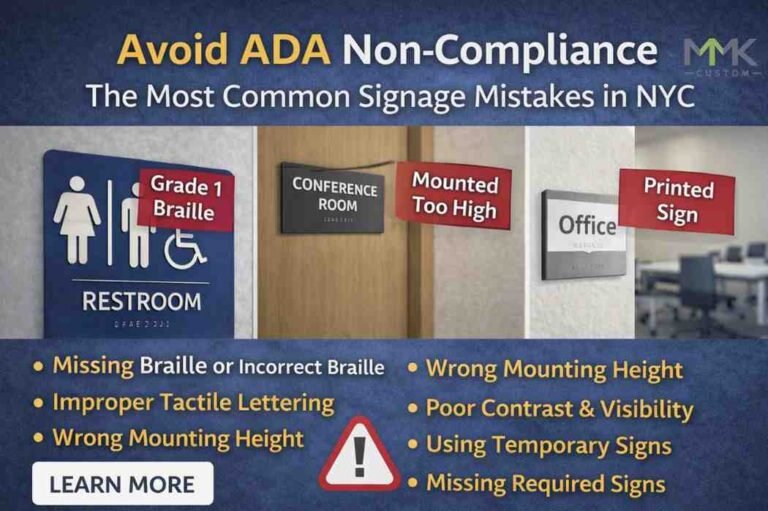
Avoid these costly errors:
- Using Grade 1 Braille instead of Grade 2
- Installing signs on the wrong side of doors
- Poor color contrast
- Glossy or reflective finishes
- Using script or decorative fonts
These mistakes frequently result in failed DOB inspections.
Real-World ADA Signage Examples in NYC
✔ Corporate Offices: Room identification signs with raised text, Braille, and brand-consistent colors.
✔ Medical Clinics: Clear restroom and exam room signage with high contrast and tactile lettering.
✔ Retail Spaces: Accessible fitting room and exit signage compliant with NYC ADA standards.
How to Ensure Your ADA Signs Meet NYC Codes?
The safest approach is working with a local NYC signage expert who understands both federal ADA laws and New York City building codes.
At Signage NY, we:
- Design ADA-compliant signage
- Manufacture inspection-ready signs
- Install according to NYC regulations
- Customize designs to match your branding
👉 Ready to get started? Get a quote today for compliant ADA signage tailored to your space.
Final Thoughts
ADA signage isn’t optional—it’s essential. By following NYC requirements and investing in professionally designed signs, you create a safer, more inclusive environment while protecting your business from penalties.
If you’re upgrading your office, opening a new location, or preparing for inspection, now is the time to ensure your ADA signs NYC compliance is 100% inspection-ready.